
Is Chess Really Massively Undervalued? Turlov's Quote, Lilov's Six Videos, and the Bangladesh Ledger
**মূল উত্তর:** বাংলাদেশ দাবায় অবমূল্যায়িত নয়, উদযাপিত — কিন্তু সঞ্চিত নয়। টার্লভের 'দাবা ভীষণভাবে অবমূল্যায়িত' উদ্ধৃতি লিলভের ছয়-ভিডিও পণ্যের বিজ্ঞাপনে যুক্ত, উৎস অযাচাই; আসল সমস্যা মূল্য নয়, মূল্য বণ্টন। **মূল তথ্য:** - দক্ষিণ এশিয়ার প্রথম গ্র্যান্ডমাস্টার বাংলাদেশের নিয়াজ মুরশেদ (১৯৮৭); আনন্দ গ্র্যান্ডমাস্টার হন ১৯৮৮ সালে। - বাংলাদেশের মোট গ্র্যান্ডমাস্টার পাঁচ, ২০০৮ সালের পর নতুন কেউ নেই। - বাংলাদেশ দাবা ফেডারেশনের বার্ষিক সরকারি সহায়তা প্রায় ১১ লক্ষ টাকা। - ২০১৩ সালে স্ট্যান্ডার্ড চার্টার্ডের স্কুল দাবা কার্যক্রম বন্ধ হয়। - ৫ জুলাই ২০২৪-এ জিয়াউর রহমান (সর্বোচ্চ Rating ২৫৭০) ঢাকার League খেলার মাঝপথে মৃত্যুবরণ করেন। **সূত্র:** মূল বিষয়বস্তু — আইএম ভ্যালেরি লিলভের ছয় প্রশিক্ষণ-ভিডিওর প্রচারপত্র ও 'টার্লভ' উদ্ধৃতি; প্রেক্ষাপট ও Statistics — প্রকাশ্য দাবা রেকর্ড ও বাংলাদেশ চেস ফেডারেশন-সংক্রান্ত প্রতিবেদন। উদ্ধৃতির মূল সূত্র অযাচাই। **সম্ভাব্য Next প্রশ্ন:** প্রশ্ন: লন্ডন সিস্টেম কি সত্যিই এলিট পর্যায়ে বিপজ্জনক? উত্তর: না — ক্লাব পর্যায়ে (১৫০০–২২০০) এটি বেশি কার্যকর; এলিট পর্যায়ে সুপ্রস্তুত কালো খেলোয়াড় আরামেই থাকে। প্রশ্ন: বাংলাদেশের দাবায় পাইপলাইনের সমস্যা কত দিনের? উত্তর: ২০০৮-এর পর নতুন গ্র্যান্ডমাস্টার নেই এবং ২০১৩-তে স্কুল কার্যক্রম বন্ধ — অর্থাৎ প্রায় এক দশকের সঞ্চয়-ঘাটতি। প্রশ্ন: সিস্টেম-ওপেনিং পণ্য কি শিক্ষানবিশের জন্য ভালো? উত্তর: সহায়ক, কিন্তু বিকল্প নয় — এটি প্যাটার্ন-মুখস্থতা বাড়ায়, ওপেনিং-বোঝাপড়া কমায়।
Outside the hall at Purana Paltan the afternoon light had begun to slant. This was 2026. I was on the coaching staff of the Bangladesh Biman team, sitting between rounds with a laptop open. On the browser was a chess advertisement. In large type, a quote: 'Chess is massively undervalued.' The quote is attributed to Turlov. But the page is not Turlov's. The page is the advertisement for six instructional videos by the Bulgarian trainer IM Valeri Lilov.
There is no bridge between the headline and the body. One quote, then a list of six videos — as if two separate rivers ran side by side and never met. I do not trust a rumour until I see the spacing, and here the spacing is plain: not one game on the page, not one rating, not one average-centipawn-loss figure. Yet the word 'undervalued' speaks in the language of numbers.
That afternoon lodged a question in my head, and I have been chasing it for six years: is chess really undervalued? And if it is, where does that value actually accrue — in whose ledger, in which column?
The quiet tide of system openings
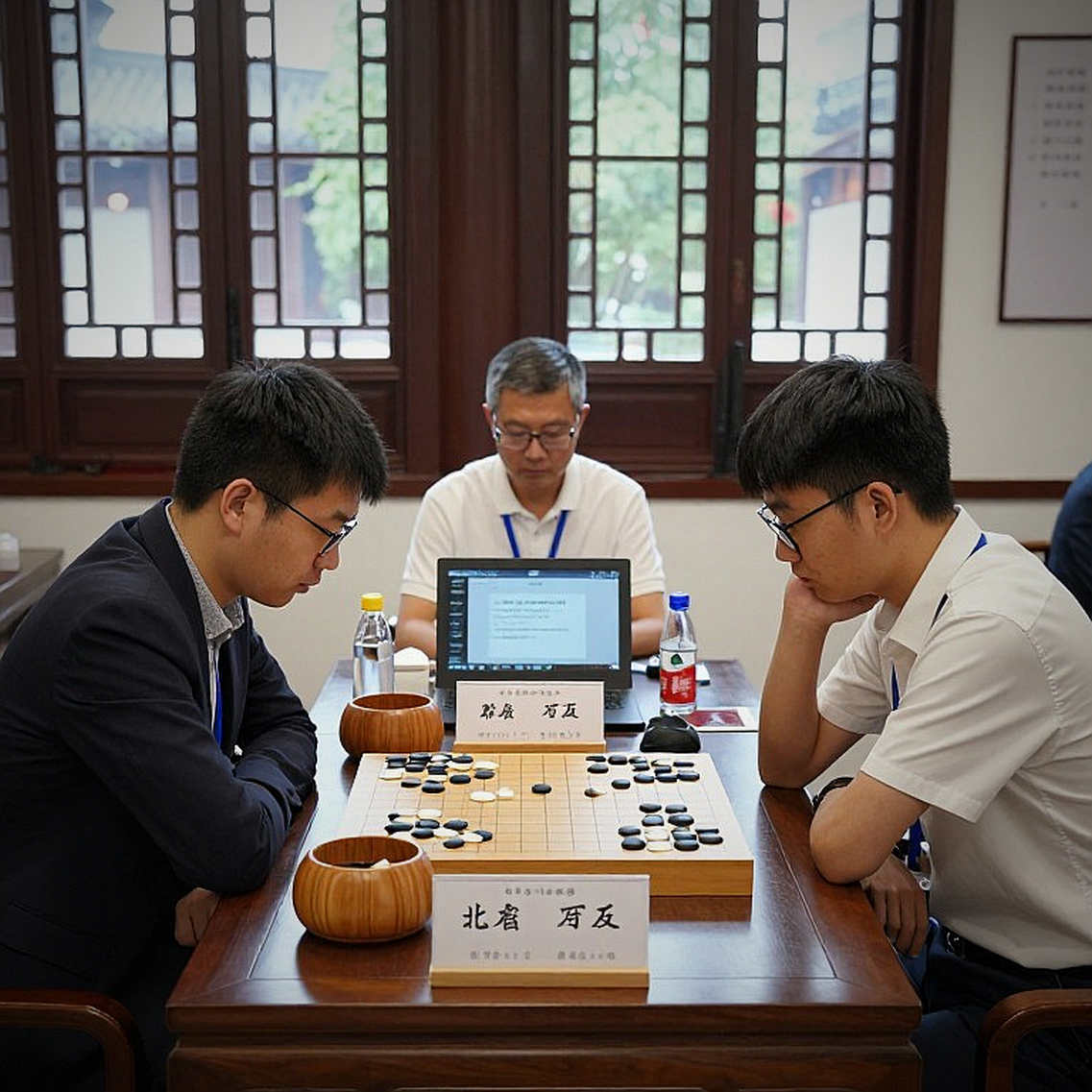
The subject of Lilov's six videos is not trivial. He has built an 'anti-system' repertoire for Black — what to do when White avoids main-line theory and plays the quiet systems. The Colle System, the Trompowsky Attack, the Torre Attack, the London System, the Catalan, the Blackmar-Diemer Gambit, the Richter-Veresov. Seven setups.
Before unpacking this tide, one thing must be clear. The main currents of chess theory are set by which paths White chooses after 1.d4. The Slav, the Semi-Slav, the Queen's Gambit Accepted, the Orthodox QGD — these are the deep sea of theory. When White does not play 2.c4, he does not enter that sea; he walks the shore. Colle, London, Torre are shore walks. White's aim is not to win, but first not to lose, and then to make the opponent uncomfortable.
This is exactly where Lilov's product belongs. I will not undervalue it, because the demand is real. Forty-four games in Batumi taught me more than a season of highlights — there I saw how often these systems recur on the lower boards. In September 2026, at the 43rd Olympiad in Batumi, I travelled with the Bangladesh team and annotated all forty-four games of the eleven rounds, four boards each, in a single notebook. One structural motif — a knight stranded behind a fixed pawn chain — returned in nine of them. That notebook taught me that a game's beauty lies in the main line, but its result is forged at the edge.
Where chess is actually undervalued — a ledger
If this sentence, 'chess is massively undervalued,' really is Turlov's, then it is not a claim but an emotion. Emotion is not wrong, but without a ledger, emotion is only a story. I like to read ledgers, because the page nobody commissioned became the only honest record.
South Asia's first grandmaster was Bangladesh's — Niaz Murshed, in 2026. Viswanathan Anand became a grandmaster in 2026, a year later. Today India has more than eighty grandmasters; Bangladesh has five — Niaz Murshed, Ziaur Rahman, Reefat Bin-Sattar, Abdullah Al Rakib, Enamul Hossain. There has been no new grandmaster since 2026. That is the true address of the 'undervaluation' — value is not lost, value is deposited in the pipeline.
I make this comparison neither as national pride nor as lament. I make it as an accounting of infrastructure. India is a parallel South Asian case — our languages, our playing culture, our closeness to the club hall. The difference was made by three decisions, three numbers.
The first number: each year the Bangladesh Chess Federation receives roughly eleven lakh taka in government support. With that money, the country's schools, clubs, coaches, tournaments and travel must all run. The second number: in 2026 the Standard Chartered school chess programme ended — the pipeline that had put a generation on the board. The third number: for board one, the Premier Division League depends on guest grandmasters from India. Our own board one is not produced; it is rented.
Set those three numbers side by side and a picture forms. In 2026 Niaz Murshed won the national title at fifty-nine. That is romantic, and simultaneously an indictment. On 5 July 2026, Ziaur Rahman — fifteen-time national champion, holder of the country's highest-ever rating at 2570 — died of a heart attack at the board, mid-game, in a Dhaka league match. Rani Hamid still wins late Olympiad games. And in 2026, at fourteen, Manon Reja Neer took the national title.
Read those four names together and one sentence stands: there is celebration, but no succession. Chess is not undervalued — chess is celebrated, but not accumulated. The difference is vast. Undervaluation means nobody pays. In Bangladesh, payment happens — praise, headlines, a day's news. But nothing is banked — not in a pipeline, not in a coaching system, not in a seven-year-old's weekly routine.
Six videos, one empty space
Now back to Lilov's product. Six videos, one plan per opening. The marketing says these systems are 'extremely dangerous,' a conclusion drawn from the 'painful experience' of many players. I recognise this language. It is not the language of analysis; it is the language of sales.
How dangerous a system truly is depends on who sits across the board. At elite level, near 2700, a well-prepared Black player is comfortable against the London or the Colle. The real 'danger' is at club level — roughly between 1500 and 2200 — where opponents are unprepared and do not know the plan. So 'extremely dangerous' is club-truth and elite-overstatement: two truths hidden in one sentence.
Another technical looseness catches my eye. These seven openings are lumped together as one '1.d4 d5 family.' But the Trompowsky, the Richter-Veresov and the Catalan usually arise after 1.d4 Nf6. The Colle, London and Torre arise after 1.d4 d5, with White declining 2.c4. One family has been blended with another — a loose stitching, not a fatal error, but a lack of precision.
Of these seven, only one has genuine elite relevance — the London System. In recent years it has been used as a low-risk weapon at the very highest level. The rest — Colle, Torre, Blackmar-Diemer — are essentially club weapons or surprises. That distinction blurs in marketing, because blurred language sells more.
The contrarian angle: where a shortcut compresses understanding
Here is the angle I consider most important. A system-opening product is not bad in itself. The question is what it promises.
The marketing says: these six videos are the solution to your problem. I say: this is the solution to one layer of your problem. The improving player's real problem is not opening knowledge; it is opening understanding. Memorising a system means you know the moves but not why they are the moves. When the opponent plays off-book, the memorised structure collapses, and you spend fifteen minutes on the clock in the first ten moves.
Three hundred hours in the engine will find the pattern you missed. In 2026, when the league stopped, the Olympiad was postponed, the sports pages were cut to four and my coaching stipend fell to zero, that is exactly what I did. Fifteen hundred games, twelve hundred stored positions, roughly fourteen hundred games of Bangladesh's five grandmasters. Those three hundred hours taught me that a memorised line is a brittle structure on the board; an understood line is a flexible principle. Every system leaks somewhere; the job is to know where before kickoff.
This is the root of it. If Lilov's product gives a club player a usable tool, I applaud it. But if the marketing language is 'solution,' it encourages pattern-memorisation over understanding. The meta is just a story coaches tell before the variables move. Chess is sold as a shortcut, but chess is won through process.
And back to that headline. The missing bridge between Turlov's quote and Lilov's videos is not merely an editing lapse — it is a methodological signal. If someone borrows a big name's quote and pins it to a small product, the remaining claims deserve the same caution. Turlov's identity and the quote's original source remain unverified. What can be verified is the arithmetic of the games — and the arithmetic of games never lies. Empty stadiums are not silence; they are a tactical confession.
The next game: what I will watch next round
So, is chess undervalued? My answer: no, chess is celebrated. Chess is full of people, audiences and enthusiasm — the global surge since the 'Gambit' era is proof. The question is not of value but of distribution. The question is who accumulates the value — a video product, a regular school, or a seven-year-old who sits at the board every Saturday.
Next round I want to watch three things. One, the continuity of the London complex at elite level — if it grows, the 'low-theory tide' thesis hardens. Two, the number of anti-system repertoire products in South Asia — how many sprout tells us the health of the education market. Three, and most important — where the names of Manon Reja Neer and his peers return over the next three years. A national title at fifteen is news; an international norm at eighteen is a system.
At sixty-four, I still build the model before I trust the eye. And my model says: Bangladesh's chess has not lost; it has stopped — since 2026, since 2026. Stopping is slower than losing, but just as certain. Until that stop is admitted, however many quotes arrive and however many videos sell, we will still be sitting in the same position on the far side of the board.