
Rio Ngumoha: Duels, Minute Caps and a Contract Clock
**মূল উত্তর:** রিও এনগুমোহা আঠারো বছর বয়সী একজন উইঙ্গার, চেলসি একাডেমি থেকে শীর্ষ ক্লাবে আসা, ইংল্যান্ডের হয়ে প্রতিযোগিতামূলক ম্যাচে অভিষিক্ত। Coachের মূল্যায়ন: এক-বনাম-এক ড্রিবলে অভিজাত, ডুয়েল ও বল ছাড়া খেলায় উন্নতি প্রয়োজন। চুক্তির মেয়াদ অপ্রকাশিত। **মূল তথ্য:** - রিও এনগুমোহা বয়স ১৮; চেলসি একাডেমির সাবেক খেলোয়াড়, বর্তমানে শীর্ষ ঘরোয়া ক্লাবে। - Coachের ভাষায় এক-বনাম-এক পরিস্থিতিতে তিনি অভিজাত, তবে ডুয়েলে ঘাটতি স্বীকৃত। - প্রতিবেদনে Coachের নাম ভুল ক্লাবে বসানো হয়েছে; এই নাম-ভুল তথ্যগুলোর নির্ভরযোগ্যতা কমায়। - চুক্তির মেয়াদ ও সমাপ্তির তারিখ কোথাও উল্লেখ নেই; এটাই সবচেয়ে বড় তথ্য-শূন্যতা। - উয়েফা লিস্ট বি তরুণ খেলোয়াড়কে সিনিয়র স্লট ছাড়া ইউরোপে খেলার সুযোগ দেয়। **সূত্র:** Goal.com প্রকাশিত প্রতিবেদন; মূল উপাদানে প্রকাশের নির্দিষ্ট তারিখ উল্লেখ নেই, তাই তারিখ যাচাই করা যায়নি। **সম্পর্কিত প্রশ্নোত্তর:** প্রশ্ন: এনগুমোহার চুক্তি কতদিনের? উত্তর: মূল প্রতিবেদনে চুক্তির মেয়াদ বা সমাপ্তির তারিখ উল্লেখ নেই, ফলে এটি অযাচাইযোগ্য। প্রশ্ন: Coachের নাম নিয়ে বিতর্ক কী? উত্তর: প্রতিবেদনে Coachকে যে ক্লাবের সঙ্গে যুক্ত করা হয়েছে, Founded তথ্যে তিনি সেই ক্লাবের Coach নন। প্রশ্ন: তরুণ খেলোয়াড়ের মিনিট ব্যবস্থাপনা কেন গুরুত্বপূর্ণ? উত্তর: শারীরিক পরিপক্বতা ও প্রতিযোগিতার ঘনত্ব মিলিয়ে বিশ থেকে পঁয়তাল্লিশ মিনিটের সীমা বাস্তবসম্মত হিসেবে ধরা হয়।
The clip is twelve seconds long. An eighteen-year-old takes the ball on the left touchline, kills the defender with his first touch, cuts inside on his second, and rolls it outside on his third to leave the full-back reaching at empty grass. The camera chases him. A commentator says a name. For the next twenty-four hours, those twelve seconds are the story of the week.

What the clip does not show is the room afterwards. In the press conference the coach praises the boy in one sentence — in a one-versus-one you would pick him — and then, in the very next sentence, names the gap: duels, and the game without the ball.
The distance between those two sentences is the real story. Praise and duty in the same breath.
So I went back to the tape to find the first mistake, not the loudest one.
The mistake was not on the pitch. The report that landed on my desk that morning carried two names attached to the wrong places. The coach was filed under a club he does not manage. The forward credited with a midweek hat-trick does not play for that club at all. Alongside them sat a Champions League scoreline, a teenage national record, and a forward-dated season label — none of it independently verified.

Twenty-seven years of notebooks teach one simple rule. When a single report contains two separate, high-salience entity errors, the rest of the copy usually comes from the same basket. In journalism that is weak sourcing. In technology it is a template error. Either way, the confidence level collapses.
This piece is therefore not a summary of that report. It is an inventory of what survives verification: duels, minutes, contracts. Those three things remain because they come from the coach's own mouth, not from a table.
Context: the boy everyone names, the facts nobody checks
Rio Ngumoha. Eighteen. A winger. A Chelsea academy product now in the first-team picture at another top club. According to the report, he is the third-youngest player to appear competitively for England, behind Jude Bellingham and Wayne Rooney.
That list is the first doubt. The canonical ordering of England's youngest debutants conventionally places Theo Walcott ahead of Bellingham. The record that anchors the entire article is, at minimum, incomplete.
This matters because of what a record actually measures. A record measures opportunity — who got a first-team door opened at what age. It does not measure quality. Where three forwards are injured, an eighteen-year-old plays; where four are fit, he waits. Same player, different record.
"Third-youngest" is a journalistic milestone, not a football metric. It is a fact about selection history, not evidence of a ceiling.
Context: the pathway nobody films
A domestic teenager moving from one Category 1 academy to another before his first senior minute is not rare in English football. The accounting behind it is almost never discussed.
When two clubs cannot agree, compensation is set by tribunal using five established criteria: training cost, academy category, time at the selling club, future potential, comparable fees. That is the standard Premier League mechanism.
For the buying club, the price is therefore far below open-market value — especially once the player has already reached the senior national team.
Here sits the quietest inequality in the modern Premier League: elite clubs buy the best sixteen- and seventeen-year-olds from each other's academies, then multiply the asset value before a single senior minute is played.
There is a second benefit that never appears on a scoreboard. A domestically trained player solves squad-registration quota problems, and that advantage cannot be bought with cash.
Context: the calendar that never makes the report
The report has the score, the quotes, the celebration of youth. It does not have the week's body: a midweek European away trip, then a Saturday league away fixture at a compact ground. Travel, a short recovery window, and an opponent built to squeeze space.
For an eighteen-year-old frame, those three words mean a specific risk. In years of note-taking I have watched young wingers break not against elite full-backs but against calendars.
Core: the isolation winger and the school football erased
Modern inverted wingers have made attacking maps homogeneous. Left-footed right wingers, right-footed left wingers, both cutting inside into the same pockets. Inside that sameness, the touchline winger is being quietly deleted.
Yet the simplest and most unplayable thing in football remains isolation: one defender, one attacker, twenty-five metres of grass.
Ngumoha's profile, as the coach describes it, leans towards that older school. Dribbling is the weapon; crossing is not the identity. The report offers no take-on volume, no dribble-success rate, no xA — so I will not invent numbers. But the coach's language is clear: give him the ball in a one-versus-one and something happens.
When football homogenises in thought, the side that can ask a different question — what happens if we leave this defender alone? — captures the value.
The counters are known. Double-up marking kills the isolation. A low block removes the space the dribble needs. A physical full-back breaks the rhythm with the first contact.
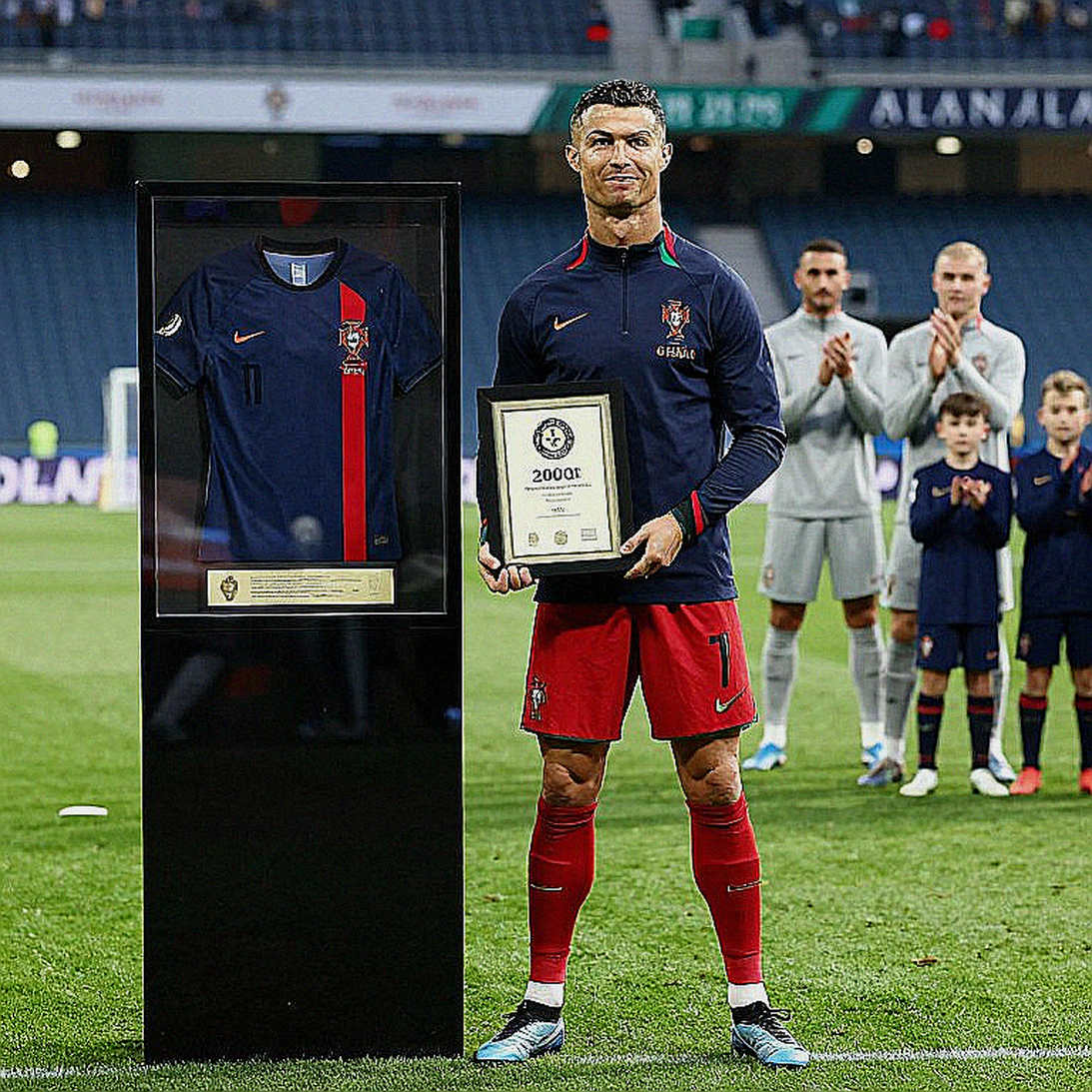
That third counter is the real question here, because the coach named it himself: duels.
Core: what a duel is, and how a referee sees it
In Law 12 terms a duel sits inside fouls and misconduct: careless, reckless, excessive force. Careless is a foul without a card. Reckless is yellow. Excessive force is red.
Lightweight teenage wingers lose duels twice over. They cannot hold the ball because their leverage is poor. And when they go down, referees often read it as a boy going down easily. Experienced forwards get the whistle; eighteen-year-olds get the doubt.
VAR added a layer here, and it redistributed rather than resolved the doubt.
The semi-automated line did not end doubt; it moved doubt to a smaller room.
Penalty-area duels are now judged in two stages: the on-field read, then the video room's "clear and obvious error" threshold. That threshold is deliberately high, so the first read usually survives.
For a young winger the implication is simple. A referee who first reads him as going down easily will rarely be overturned.
Protocol is how we remember what passion wants to forget.
Core: "without the ball" — the coach's real concern
In a modern top side a winger's job does not end with possession. Within three seconds of losing it he must be in a defined place. That is what pressing metrics try to capture.
A young winger's failure mode is here. Brilliant going forward, stationary for two seconds after the ball is lost. At elite level those two seconds are forty metres of opposition progress.
In a high-line team the most expensive player is the one who creates magic in possession and returns to the structure late.
The coach's phrase — we have to help him with these processes — signals an institutionalised individual development plan: minute targets, physical benchmarks, staged progression.
Core: the 6-3 scoreline and what xG cannot answer
Six scored, three conceded. The result masks the process. Conceding three in a six-goal win is a divergence signal: attacking production is ahead of defensive control.
xG answers one question — shot quality. It cannot explain why a defender dropped, why a pass failed, why a referee did not whistle a duel. It cannot describe a teenager's current state either.
A metric that cannot explain a decision cannot be used to justify one.
Core: minute management, twenty to forty-five
The most efficient use of an elite 1v1 winger with acknowledged off-ball gaps is a second-half impact role against tiring, booked full-backs, or a start in a low-intensity fixture. The worst use is a high-transition match demanding repeated defensive duels.
Managing a young player is really managing match selection: when he plays matters more than whether he plays.
The coach's line that he is getting stronger physically implies strength and conditioning is already the gating factor, not technical readiness.
Core: the contract clock — the report's largest absence
Contract length and expiry are not stated. Without them the valuation is unanchored.
This is the inverse of a panic premium. The risk is not overpaying but under-protecting: a cheap, high-ceiling asset whose market value is rising faster than his contract security.
Premier League rules cap youth contract length, requiring timely professional registration. The selling academy may retain a sell-on percentage and will in any case be entitled to solidarity contributions. A rapid re-valuation creates pressure for a second contract inside twelve months, which resets the wage benchmark for the whole young cohort.
Separating process from outcome matters: the club may have followed the rules and still left the asset under-protected.
Core: List B, the quiet mechanic
UEFA's List B allows eligible youngsters to play in Europe without occupying a senior squad slot, subject to age and minimum time at the club. That mechanic is silent and decisive: strong academies can field teenagers in Europe at no squad cost.
The governance risk here is timing, not sanction — securing registration and any extension before rival inducement becomes possible.
Core: the hype cycle and the deliberate brake
Praise first, limit immediately after. Confidence without a bubble.
When a coach publicly names a weakness, it is protection, not criticism: he is pre-empting the story so it cannot later become news.
The cost is a ready-made critique template for every opponent and pundit. The simultaneous praise of another attacker looks like narrative dilution.
The empty stadium taught me that silence can be archived like a witness. Nobody in that room asked about the contract. Every question was about the dribble.
Contrarian: the record measures nothing, and the teenager is not the story
The most important part of this story is not the teenager. It is the coach and the contract.
If the record list is incomplete, the whole frame rests on a misordering — and those errors always run in one direction, towards the more dramatic version.
The most uncomfortable point: a report that can misplace a manager's club is not a reliable guide to a teenager's development plan.
And the market reality: elite clubs' competition for young talent is largely a brand arms race. Real value is built in smaller academies, in unscouted places, where cameras do not go.
Someone is talking about an eighteen-year-old's dribble; someone else is calculating his contract expiry. The second conversation decides the club's future.
The biggest enemy of young talent is not neglect but excess expectation. The hype-to-kill cycle is manufactured by those who need a story in every clip.
I went back to the tape to find the first mistake, not the loudest one. Here the first mistake was a name attached to the wrong club.
Takeaway
The next chapter is written in a file, not on a pitch.
Watch the first start at a compact away ground, where duels arrive repeatedly and the full-back tests him physically. Watch duel retention rather than highlight reels. Watch for a contract announcement this season — if none comes, the question stays, and the pitch cannot answer it.
And one question with no answer yet: when we discuss an eighteen-year-old's dribble this intensely, whose story are we telling — his, or the institutions that represent him? Breaking a record is easy. Surviving inside it is hard. The hardest work happens in the small room where contracts are signed, registrations are filed, and the first decisions of a career are written.